National Dialogue Highlights the Role of Civil Society in Advancing Decentralization and Citizen Participation in Rwanda
Kigali, December 17, 2025 — A national-level dialogue focusing on the role of Civil Society Organizations (CSOs) in promoting decentralization and citizen participation was held this Wednesday at the Muri Serena Hotel in Kigali. The discussions emphasized an in-depth analysis of the contribution of the Public Policy Information, Monitoring and Advocacy (PPIMA) initiative in enhancing citizen engagement and public acceptance of government policies, as well as a review of the Decentralization Assessment Framework (DAF).
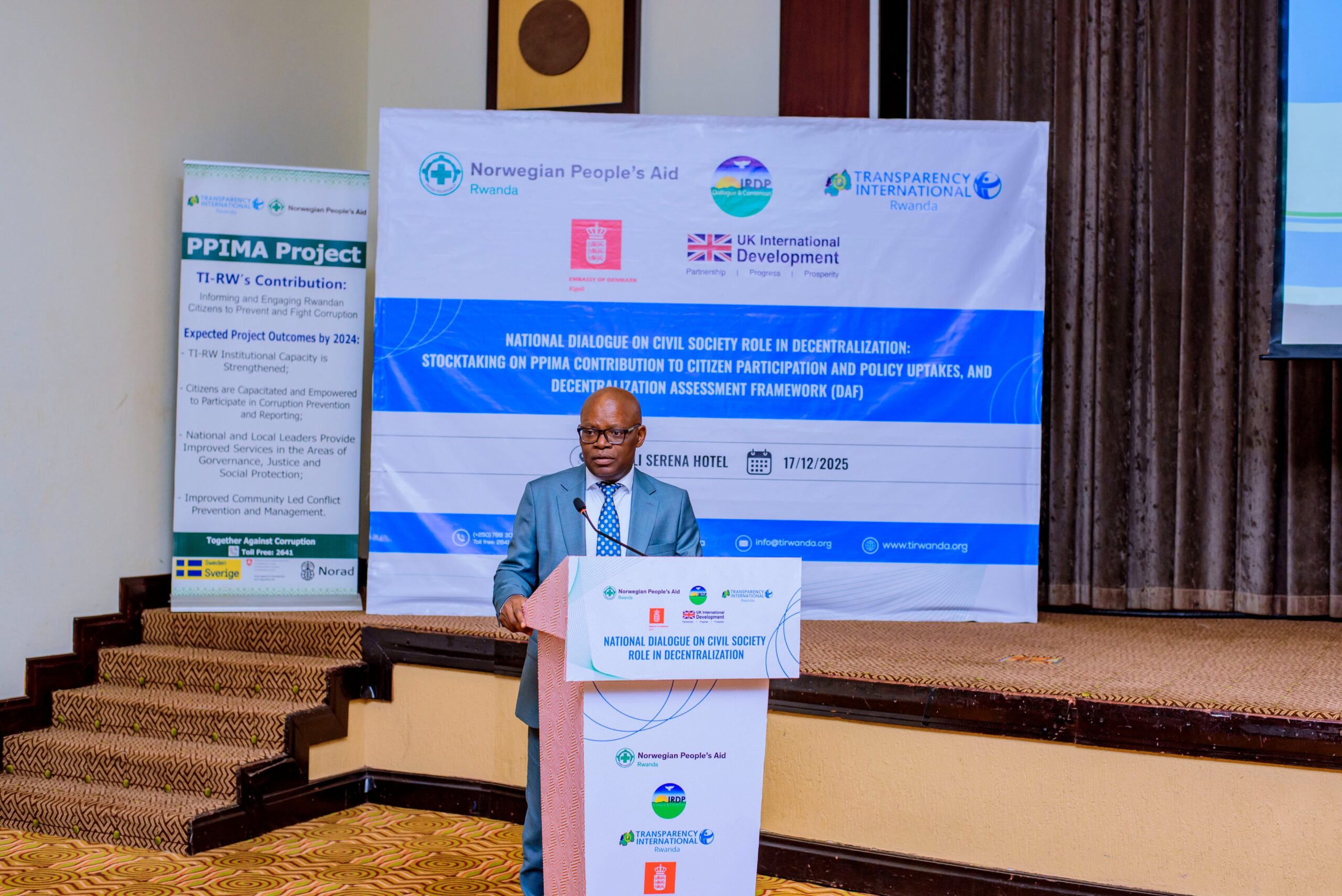
The dialogue was organized by Transparency International Rwanda (TI-Rwanda) in partnership with Norwegian People’s Aid (NPA), the Institute of Research and Dialogue for Peace (IRDP), CLADHO, Health Development Initiative (HDI), and Tubibe Amahoro. The main objective was to assess how civil society can play a more effective role in strengthening good governance and amplifying citizens’ voices in national decision-making processes.

Presentations delivered during the event highlighted the significant role of PPIMA in disseminating public policy information, monitoring the implementation of government policies, and empowering citizens with the knowledge needed to actively participate in decision-making processes that affect their lives.
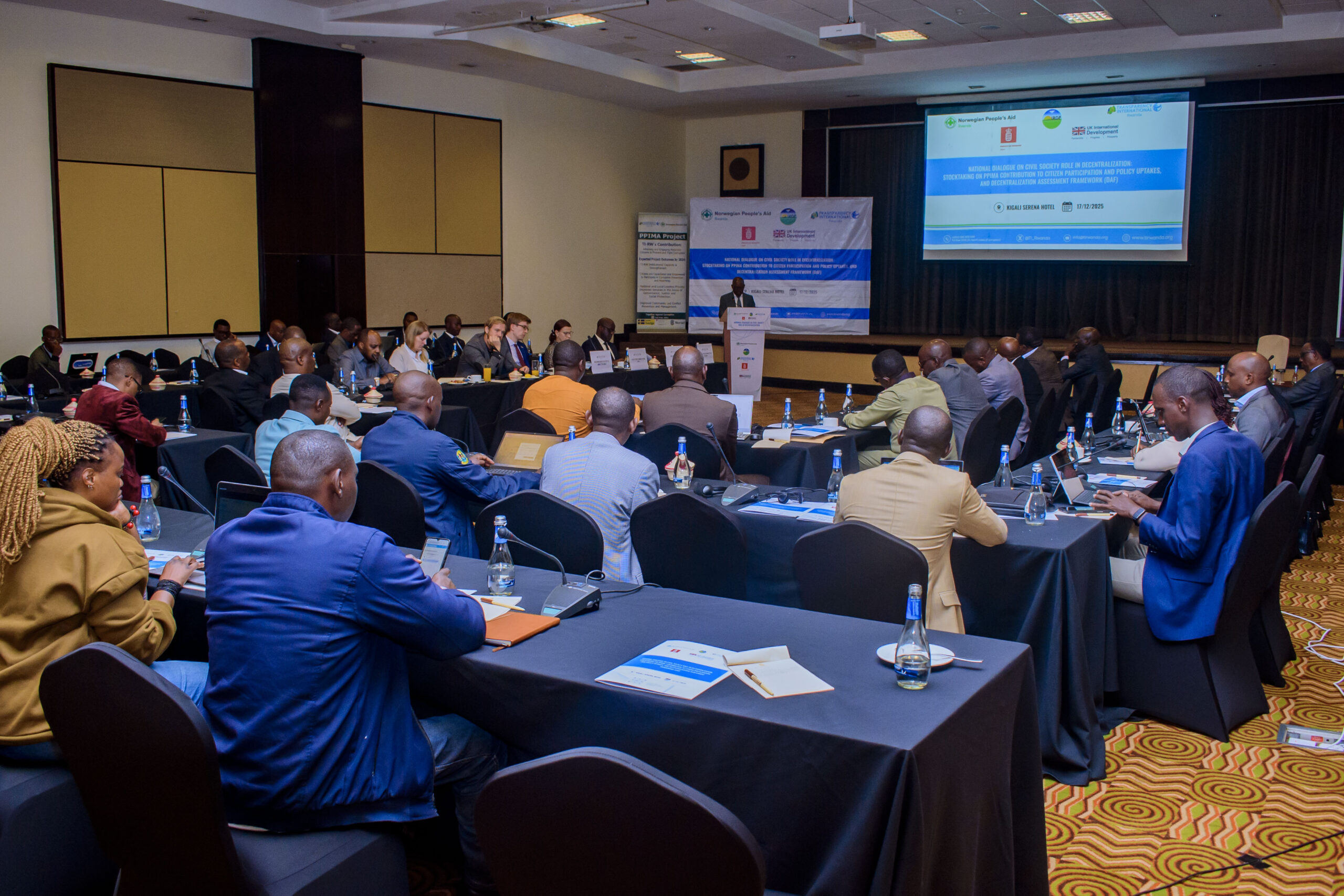
Participants underscored the importance of decentralization as a key driver for citizen empowerment, enabling communities to have a meaningful say in local development initiatives while strengthening accountability at local government levels.
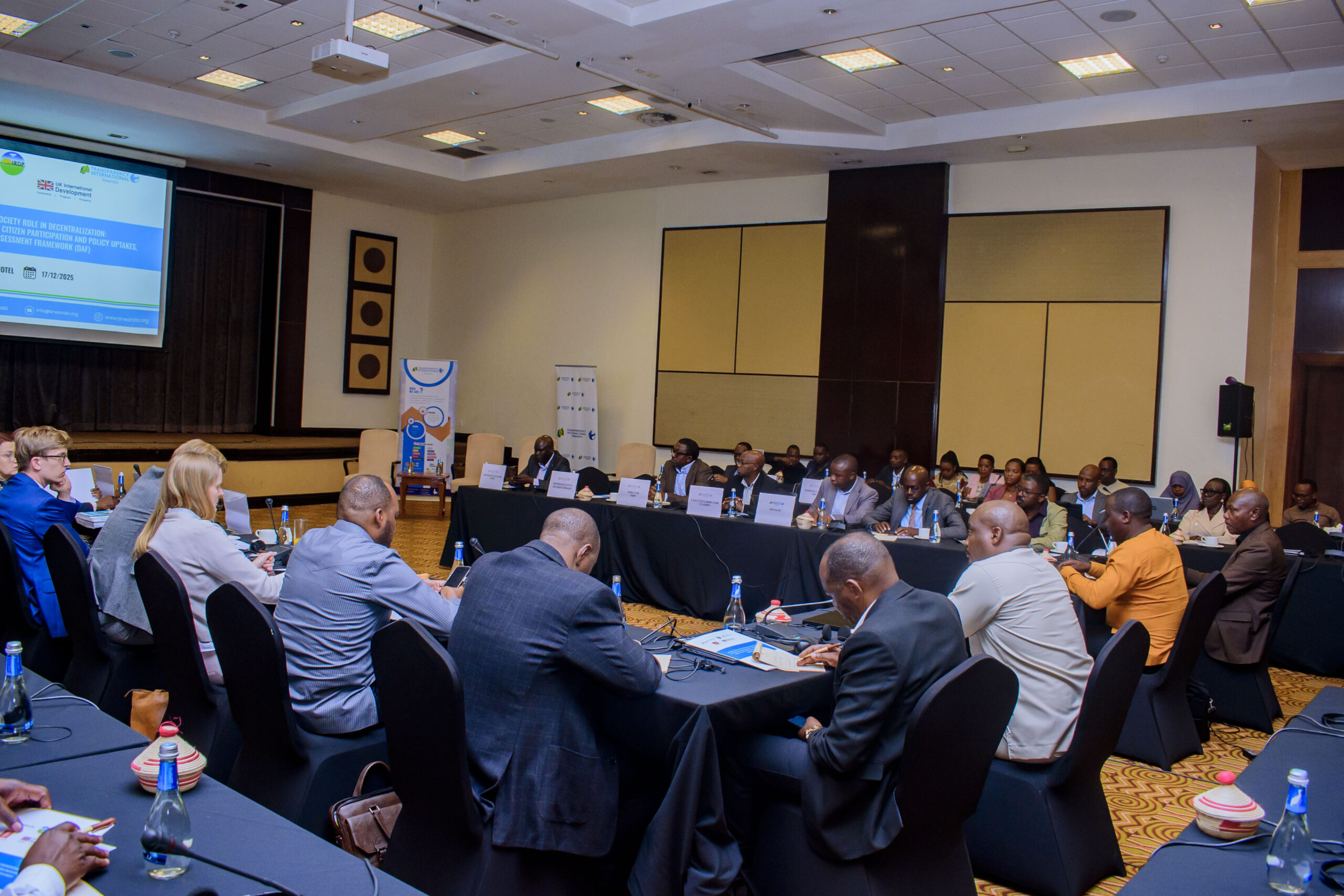
Discussions also focused on the Decentralization Assessment Framework (DAF) as a critical tool for measuring the progress of local government entities in implementing decentralization principles. The framework assesses various dimensions, including governance, financial management, and human resource administration.
Representatives from various civil society organizations and government institutions emphasized the need for sustained and structured collaboration among government, civil society, and citizens. Such collaboration, they noted, is essential to ensure that national policies are both formulated and implemented in line with citizens’ needs and priorities.
The outcomes of this dialogue are expected to generate practical and actionable recommendations that will inform policy refinement and strategic interventions aimed at promoting good governance, accountability, and inclusive citizen participation in Rwanda’s governance system.